
Benefits and Importance of Solar Tracking Systems for Enhanced Energy Efficiency
By:Admin
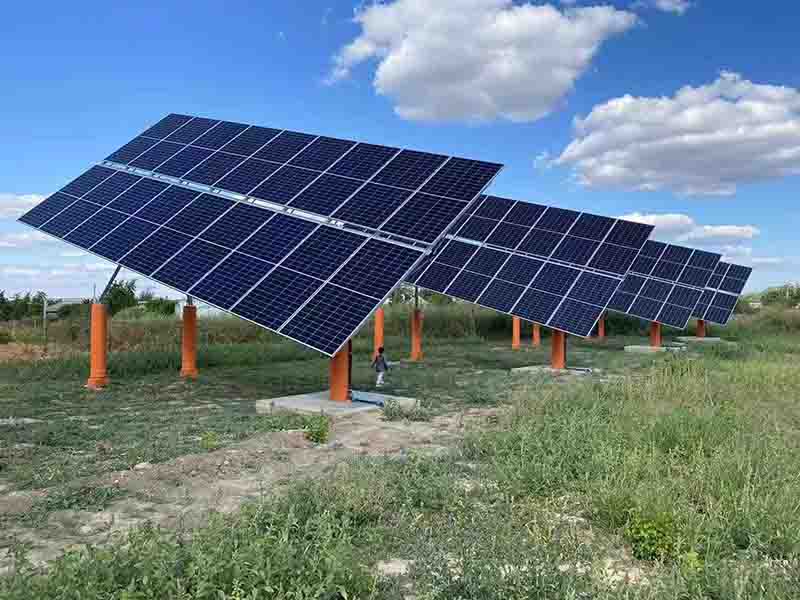
As the global demand for clean and sustainable energy continues to soar, solar power has emerged as one of the most promising and rapidly expanding renewable energy sources. However, maximizing the efficiency and output of solar installations remains a critical challenge for the industry. This is where solar tracking systems play an essential role, significantly enhancing the performance and viability of solar power projects worldwide.
Solar tracking systems are mechanical devices designed to orient photovoltaic panels or solar concentrators toward the sun throughout the day. By continuously adjusting the position of solar panels to follow the sun’s trajectory, these systems optimize the amount of solar energy captured, thereby boosting overall energy generation. Unlike fixed-tilt solar arrays, which remain stationary, solar trackers adapt in real-time to the sun’s movement, ensuring that panels receive maximum sunlight exposure from dawn to dusk.
### The Need for Solar Tracking Systems
With solar energy installations expanding from small residential rooftops to large-scale solar farms, efficiency improvements are more critical than ever. Fixed solar panels typically produce energy at their peak when the sun is directly overhead, but their performance diminishes during morning and evening hours when the sun’s angle is lower. This limits the total daily energy output and ultimately affects the return on investment for solar projects.
Solar tracking systems solve this problem by maintaining an optimal angle between the solar panels and the sun throughout the day. This dynamic alignment can increase energy yield by 10% to 30%, depending on geographic location, weather conditions, and system design. In some high-sunlight regions, the enhancement can be even greater.
Moreover, these systems enable better land utilization. Since solar trackers generate more energy per panel, fewer panels and less space may be required to meet a specified power output. This results in reduced capital expenditure on solar modules and related infrastructure, accelerating project payback periods.
From environmental sustainability to economic feasibility, solar tracking systems offer compelling benefits:
- **Enhanced Energy Production:** By following the sun’s path, trackers capture more sunlight, boosting power output and improving plant performance ratios.
- **Improved Financial Returns:** Higher yields translate to better revenue generation, making solar investments more attractive to developers and financiers.
- **Adaptability:** Modern solar trackers can be integrated with various solar technologies, including photovoltaic panels and concentrated solar power (CSP) systems.
- **Technological Innovation:** Advances in sensors, control algorithms, and materials have improved the reliability and reduced the maintenance costs of tracking systems.
### Types of Solar Tracking Systems
Solar tracking systems are broadly categorized into single-axis and dual-axis trackers. Single-axis trackers rotate panels on one axis, usually aligned north-south, allowing east-to-west movement following the sun’s daily path. Dual-axis trackers provide movement on two perpendicular axes, both east-west and north-south, enabling panels to tilt to optimize sunlight exposure seasonally as well as daily. Although dual-axis trackers generally deliver higher efficiency gains, single-axis trackers are more cost-effective and easier to maintain, often favored for large utility-scale solar farms.
### Integration into Commercial and Utility-Scale Projects
For commercial and utility-scale solar projects, the integration of solar tracking systems has become increasingly common. The higher initial investment in tracking technology is offset by the enhanced power output and improved grid integration capabilities. As electricity markets evolve and incentives for renewable energy expand, developers emphasize maximizing energy harvest and grid reliability.
Additionally, solar tracking systems contribute to the diversification of renewable energy portfolios by ensuring more consistent and predictable power generation. This helps utility companies balance demand and supply, especially as solar power penetration rises.
### Company Introduction
Within this evolving landscape, industry leaders have been pioneering solar tracking technologies that set new standards for efficiency, durability, and innovation. These companies specialize in designing, manufacturing, and deploying sophisticated tracking solutions that cater to diverse project scales and geographic contexts.
Leveraging decades of experience and cutting-edge research, such companies develop tailored systems that integrate seamlessly with existing solar infrastructure. Their engineering teams focus on durability to withstand harsh environmental conditions, precision control systems for optimized tracking accuracy, and modular designs that simplify installation and maintenance.
Furthermore, these enterprises often collaborate with solar project developers, utilities, and policymakers to promote the adoption of tracking technology and support the transition to a sustainable energy future. By providing end-to-end solutions—from initial consultation and system design to installation and after-sales service—they play a vital role in enabling solar projects to achieve superior performance and financial viability.
### The Future of Solar Tracking Systems
As solar technologies continue to mature, the role of solar tracking systems is expected to grow even more prominent. Innovations such as AI-driven controls, IoT-enabled monitoring, and smart grid integration are expanding the capabilities of tracking devices, making them more efficient, reliable, and adaptive.
Moreover, with the global push toward decarbonization and climate change mitigation, the pressure to maximize renewable energy production will intensify. Solar tracking systems will be at the forefront of helping solar projects meet ambitious energy targets, reduce costs, and minimize environmental footprints.
In conclusion, solar tracking systems represent a critical advancement in the solar energy sector, offering substantial benefits in energy yield, project economics, and operational flexibility. Their adoption supports the overarching goals of sustainability and energy independence, positioning solar power as a linchpin in the global energy transition.
Industry leaders who continue to innovate and advocate for the implementation of solar tracking technology will be instrumental in shaping a cleaner, greener energy future for communities worldwide.